

At most medical congresses, the challenge isn’t finding information.
It’s managing it under pressure.
MSLs arrive with packed schedules — multiple sessions happening simultaneously, back-to-back meetings with Key Opinion Leaders (KOLs), internal discussions, and constant exposure to new data. By the end of the day, the volume of information alone can become overwhelming.
But what determines success at a congress is not how much information is collected.
It’s how effectively time and attention are allocated.
In practice, the most efficient MSLs are not the ones who attend the most sessions or take the most notes.
They are the ones who are most intentional about why they are there in the first place.
For a broader framework covering the full congress workflow, from planning through post-conference execution, see our complete guide here Maximize Your Congress Attendance as an MSL.
Efficiency Starts With Strategic Clarity
Before a single session begins, the most important question is simple:
Why are you attending this congress?
The biggest mistake we see is when teams approach conferences without clear alignment on what they are expected to capture or deliver. Without that clarity, schedules become reactive, and valuable time is spent on activities that do not directly support organizational priorities.
Across the teams we’ve worked with, the ones that operate most effectively are those that enter congresses with clearly defined intent — not just full calendars.
In practice, the most effective MSLs enter congresses with a clear understanding of:
- the key scientific or strategic questions they are expected to answer
- the types of insights leadership is looking for
- the interactions that will have the greatest impact
This includes knowing whether the focus is on gathering scientific intelligence, engaging with specific KOLs, supporting internal data dissemination, or observing competitor activity.
When that clarity exists, decisions about which sessions to attend, which meetings to prioritize, and how to allocate time become significantly easier.
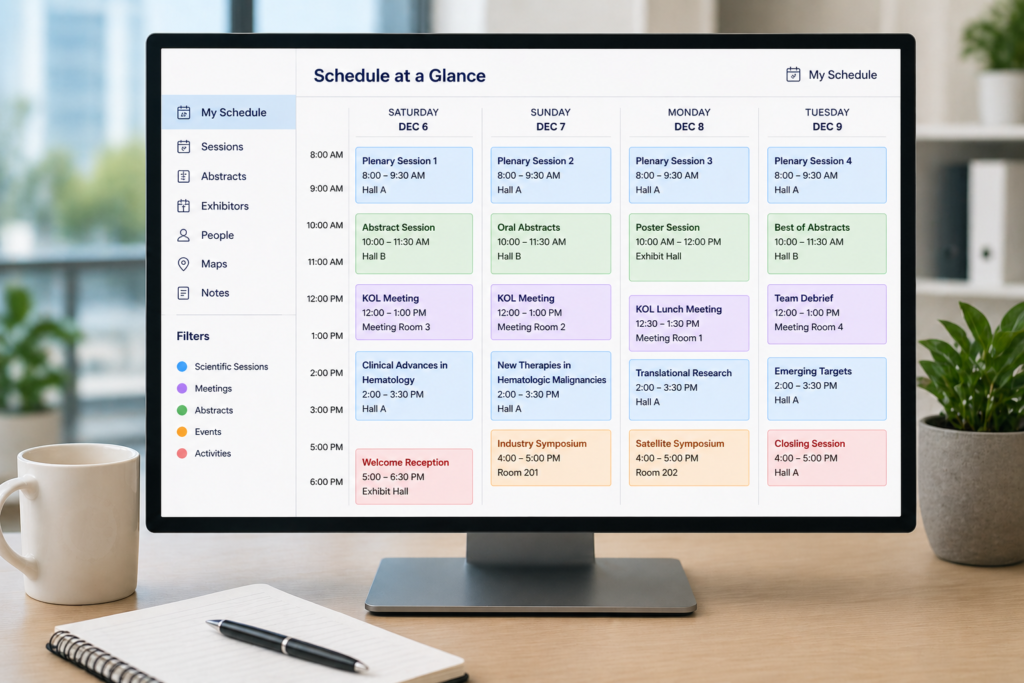
Preparation Determines What You Capture
What most teams underestimate is how much pre-congress preparation influences efficiency during the event itself.
Large congresses often have multiple concurrent sessions, making it impossible to attend everything. Without preparation, MSLs are forced to make decisions in real time, often missing higher-value opportunities.
Effective teams approach this differently. They review speaker lists, abstracts, and available materials in advance. They identify which sessions are most relevant to their therapeutic area and strategic objectives. They also begin forming a preliminary structure for how information will be captured and reported.
This preparation serves two purposes.
First, it reduces decision fatigue during the congress.
Second, it ensures that note-taking is focused on what actually matters, rather than capturing information indiscriminately.
Efficiency Is a Cross-Functional Effort

Congress efficiency is rarely an individual effort.
It is a coordinated, cross-functional activity.
Medical Affairs and Commercial teams often operate in parallel at congresses, but when their efforts are aligned, the value of the information collected increases significantly.
What actually works is structured collaboration.
Medical Affairs teams bring scientific insights and a deep understanding of clinical data. Commercial teams bring market context and visibility into customer perspectives. When these insights are shared consistently — through daily debriefs or structured check-ins — a more meaningful picture begins to emerge.
This alignment also helps avoid duplication of effort and ensures that interactions with healthcare professionals are purposeful rather than repetitive.
The result is not just more information, but better information.
Mentorship Accelerates Efficiency
Congress environments can be difficult to navigate, especially for MSLs attending their first major meeting.
The learning curve is steep.
One of the most effective ways to accelerate that learning is through mentorship.
For less experienced MSLs, working closely with a more experienced colleague can provide practical guidance on how to prioritize sessions, manage interactions, and capture meaningful insights.
For experienced MSLs, mentoring others is an opportunity to reinforce best practices and create consistency across the team.
What most teams overlook is that efficiency is not only about tools and processes, it is also about shared experience.
Standardization Turns Activity Into Output
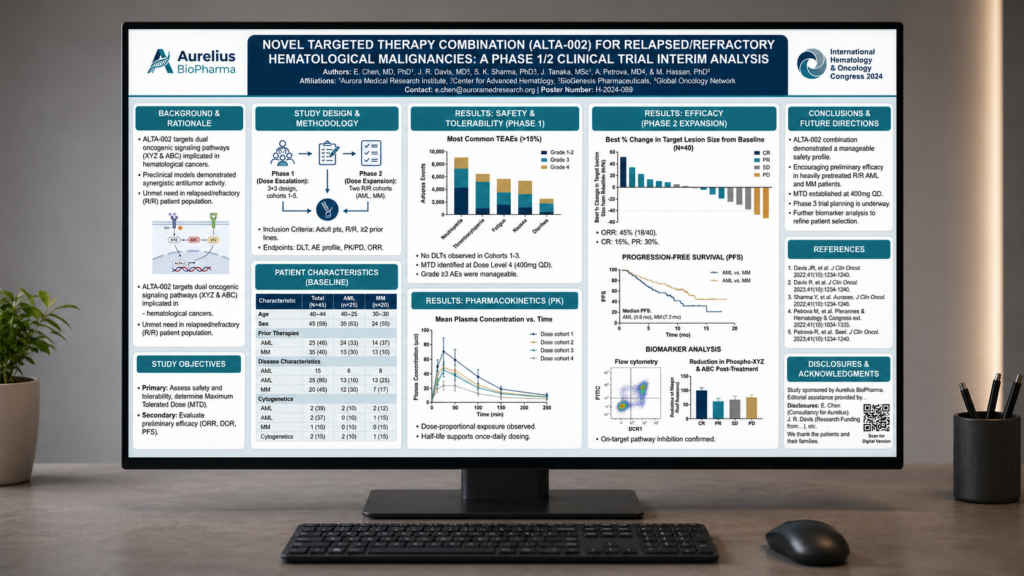
Capturing information is only one part of the equation.
The real challenge is turning that information into something usable.
The biggest mistake we see is when each MSL documents their work differently. Without a consistent structure, it becomes difficult to compare insights, identify patterns, or communicate findings clearly to leadership.
Standardization solves this problem.
This begins with defining what constitutes an actionable insight. Without that definition, teams often capture large volumes of information that have little strategic value.
From there, consistent reporting structures — such as predefined formats for summaries or key takeaways — help ensure that outputs are clear, comparable, and useful.
Technology plays an important role here as well.
Platforms that allow teams to capture, organize, and share insights in real time reduce administrative burden and improve consistency across reporting. When combined with analytics capabilities, these systems can also help identify recurring themes and ensure that insights are interpreted consistently across teams.
AI Is Changing How MSLs Manage Congress Workflows
As the volume of congress activity increases, many teams are beginning to incorporate AI into their workflows.
AI tools can help organize notes, identify patterns across interactions, and accelerate the process of synthesizing information into structured outputs.
But the same principle applies here as in other areas, AI does not create efficiency on its own.
The teams that benefit the most are those that combine structured workflows, clear objectives, and strong scientific judgment with AI-assisted analysis.
When used this way, AI becomes a force multiplier — not a replacement for expertise.
Why Conference Efficiency Works Best Within a System
As congress participation becomes more complex, managing schedules, notes, insights, and follow-up actions across large teams becomes increasingly difficult.
We’ve consistently seen Medical Affairs teams struggle with fragmented workflows — where information is captured across multiple tools, making it difficult to connect insights or retrieve them later.
The teams that operate with the most clarity are those that treat congress execution as a connected system — not a collection of individual efforts.
That experience ultimately led to the development of the inVision platform.
Rather than treating scheduling, note-taking, and reporting as separate processes, the platform was designed to bring them together into a single system. Teams can manage congress activities, capture insights in real time, and organize information in a way that remains searchable and accessible long after the event ends.
The goal was not simply to improve organization.
It was to help teams operate with greater clarity, coordination, and efficiency at scale.
For Medical Affairs teams looking to improve how they manage congress activities, capture insights, and coordinate across teams, inVision was built specifically for this challenge.
The platform helps teams organize schedules, centralize notes, and transform large volumes of congress data into structured, actionable intelligence.
If you’re exploring ways to make your team more efficient at congresses, feel free to reach out. We’re always happy to share what we’ve seen work in practice.