

At major medical meetings, late-breaking sessions often shape the most important scientific discussions of the entire congress. These presentations introduce data that emerges after standard submission deadlines, which means clinicians and Medical Affairs teams are often interpreting new findings in real time.
At inThought, we have spent years supporting Medical Affairs teams as they navigate these sessions across hundreds of scientific meetings. One lesson becomes clear very quickly: the challenge is rarely capturing the slides. The real challenge is interpreting the results quickly, responsibly, and with enough context to help internal stakeholders and the broader medical community understand what the data actually means.
Preparation Before the Meeting
In our experience supporting congress coverage teams, the quality of a late-breaking summary is usually determined long before the presentation begins. Teams that arrive with clear priorities and shared context are far better positioned to interpret new data when it appears.
Identify Sessions That Could Shift the Conversation
Agenda review should go beyond identifying sessions that appear relevant on the surface. Focus on presentations labeled as late-breaking, plenary updates, or high-impact abstract sessions. These sessions often introduce data that influences how the therapeutic community interprets the treatment landscape.
Preparing background context on these programs in advance allows Medical Affairs teams to evaluate the significance of the data more quickly when it is presented.
When preparing for these sessions, experienced teams often review what was presented at the previous year’s congress. Looking back at similar sessions or topics from last year helps determine whether the new presentation represents a genuine shift in the data or simply an incremental update. This historical context
also helps teams recognize emerging trends across multiple congress cycles.
Coordinate Coverage Across the Team
At large meetings, late-breaking presentations are frequently scheduled at the same time across different rooms. Clear assignment of session coverage helps ensure that the most relevant sessions are captured without duplication or gaps.
In practice, the teams that manage this well treat congress coverage as a coordinated effort rather than a series of independent note-taking activities.
Capture What Happens Around the Data
The most valuable insights from late-breaking sessions rarely come from the slides alone. They emerge from how experts interpret the findings during discussion.
Listen to How Experts Respond
Audience questions, panel discussion, and hallway conversations often reveal how clinicians interpret the results in real time. Capturing those reactions can provide early insight into how the data may influence treatment decisions.
These qualitative signals frequently shape how organizations interpret the significance of the study.
Add Interpretation While the Context Is Fresh
Waiting until the end of the meeting to interpret late-breaking data rarely produces the strongest summaries. Adding brief interpretive notes during or immediately after the presentation preserves context that is difficult to reconstruct later.
Even a short note about why a specific result matters can dramatically improve the usefulness of the final report.
Compare the Findings to Last Year’s Congress
As mentioned above, one of the most valuable questions teams ask when reviewing late-breaking data is whether the findings genuinely move the field forward or simply extend what was already presented the previous year. Looking back at prior congress coverage can quickly reveal whether the study represents a meaningful change in evidence or another year of similar data with incremental updates.
In practice, however, retrieving last year’s notes, slides, and interpretations can be surprisingly difficult when that information is scattered across email threads, shared drives, or old SharePoint folders. Teams often spend valuable time trying to locate past material instead of analyzing the new data in front of them.
This recurring friction is something we encountered repeatedly while supporting congress coverage projects. It eventually led our team to build the inVision platform for internal use so we could revisit prior congress coverage quickly and compare what was being presented this year with what had already been discussed before. (More on that below.)
Turning Data Into a Coherent Narrative
Scientific summaries are most valuable when they guide the audience through the meaning of the data rather than simply listing results.
Focus on the Elements That Drive Interpretation
When summarizing late-breaking studies, several elements consistently shape how the data should be interpreted:
• Study design and patient population
• Primary and secondary endpoints
• Statistical significance and effect size
• Safety signals or unexpected findings
• Potential implications for clinical practice
Highlighting these elements allows the audience to understand both the strength of the evidence and its potential limitations.
Structure the Story Behind the Results
One of the most effective ways to communicate new data is to frame it within the clinical problem it addresses. Start by establishing the current treatment landscape and the limitations clinicians face. Then introduce the new findings and explain how they might change the conversation.
This structure helps transform raw study results into a coherent explanation of why the data matters.
Tailor Communication to Different Audiences
The same late-breaking data often needs to be communicated in different ways depending on the audience.
For Clinicians and Key Opinion Leaders
Discussions with clinicians should remain focused on objective scientific interpretation and clinical relevance. Providing balanced context helps ensure that new findings are evaluated appropriately within the existing evidence base.
For Internal Medical and Commercial Teams
Internal summaries often require deeper interpretation. Competitive implications, strategic considerations, and potential impact on development programs become more important in this context.
After the Meeting: Turning Insights Into Action
Once the congress ends, the responsibility shifts from capturing information to distributing insight.
Engage With Experts After the Meeting
Follow-up discussions with KOLs can provide additional perspective on how the late-breaking findings may influence clinical decision-making.
These conversations often reveal nuances that were not immediately apparent during the presentation.
Create Content That Is Easy to Share
Short summaries, visual slide overviews, and focused briefing documents help organizations distribute new insights quickly across teams.
When the information is structured clearly, it becomes easier for stakeholders to engage with the findings.
Final Perspective
Summarizing late-breaking data is one of the most important responsibilities Medical Affairs teams carry during major scientific meetings.
When preparation, structured capture, and thoughtful interpretation come together, late-breaking data becomes more than a headline. It becomes actionable scientific insight.
A Word on Tools
Late-breaking sessions move quickly. Data appears with little warning, multiple presentations happen at once, and teams often need to synthesize findings within hours.
Many organizations still manage this process with spreadsheets, shared folders, and personal note systems. It works—but it often creates friction later when teams try to assemble slides, notes, images, and interpretations into a coherent summary.
Here at inThought, that experience is what led us to build inVision. We originally developed the platform while supporting Medical Affairs teams covering complex congresses and late-breaker sessions. The goal was simple: make it easier to capture information in context and organize it in a way that supports rapid interpretation.
One challenge we encountered repeatedly during congress preparation was the difficulty of looking back at prior meetings. Teams often want to understand how this year’s data compares with what was presented the previous year, but the relevant slides, notes, and interpretations are frequently scattered across old folders, email threads, or shared drives. As a result, valuable time is spent trying to locate past material rather than interpreting the new findings.
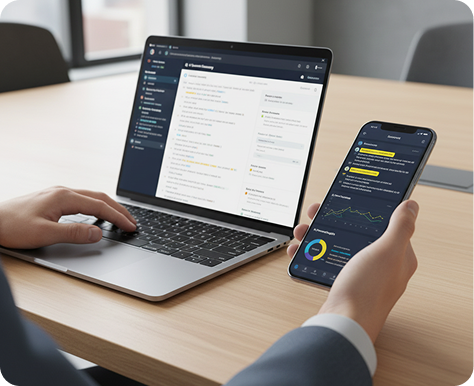
With inVision, all the data lives in one integrated system and is easy to find. Slides are attached directly to the sessions where they were presented. Notes and analysis live alongside the source material. Images are automatically indexed so text becomes searchable later. Because everything is stored in one place, teams can quickly revisit prior congress coverage and compare what is being presented this year with what was discussed previously.
Teams can also assign coverage ahead of the meeting and assemble debrief summaries from the sessions that were actually covered.
When the mechanics of capturing and organizing information are handled cleanly, Medical Affairs teams can spend less time stitching materials together and more time interpreting what the science actually means.
If improving your team’s approach to conference coverage is on the agenda this year, feel free to reach out. We’re always happy to share what we’ve seen work in practice.