
Over the past two decades, we’ve supported Medical Affairs and MSL teams at hundreds of scientific congresses — from small, highly specialized meetings to the largest global congresses in oncology, cardiology, and immunology. We’ve seen what works under real pressure, and we’ve seen where even strong teams struggle.
Congress coverage looks straightforward on paper. In practice, it’s messy. Sessions overlap. KOL discussions evolve in unexpected directions. Internal stakeholders request updates before the day is over. By the end of the first afternoon, even experienced teams can feel stretched thin.
The difference between teams that return with real clarity and those that return with folders full of disconnected material usually comes down to something simple: whether there was a deliberate structure underneath the activity.
Not a complicated framework or a buzzword-labeled methodology. Just disciplined preparation, consistent capture, and thoughtful follow-through.
Here’s what we’ve seen hold up — before, during, and after the meeting.
Before the Congress: Clarity First
The biggest mistakes usually happen before anyone boards a plane.
Start With a Real Question
Instead of asking, “What sessions are we attending?” try asking something harder:
What do we need to understand better by the end of this meeting?
Is there a competitor program you’re tracking closely? A shift in standard of care you’re watching? A KOL perspective which leadership has been debating internally?
When those questions are defined clearly, the rest of the coverage becomes more focused. Without them, it’s easy to accumulate information that feels productive in the moment but doesn’t connect to anything later.
You don’t need a long strategic document, just a few sharp priorities to keep the team centered as the congress unfolds.
Build Margin Into the Schedule
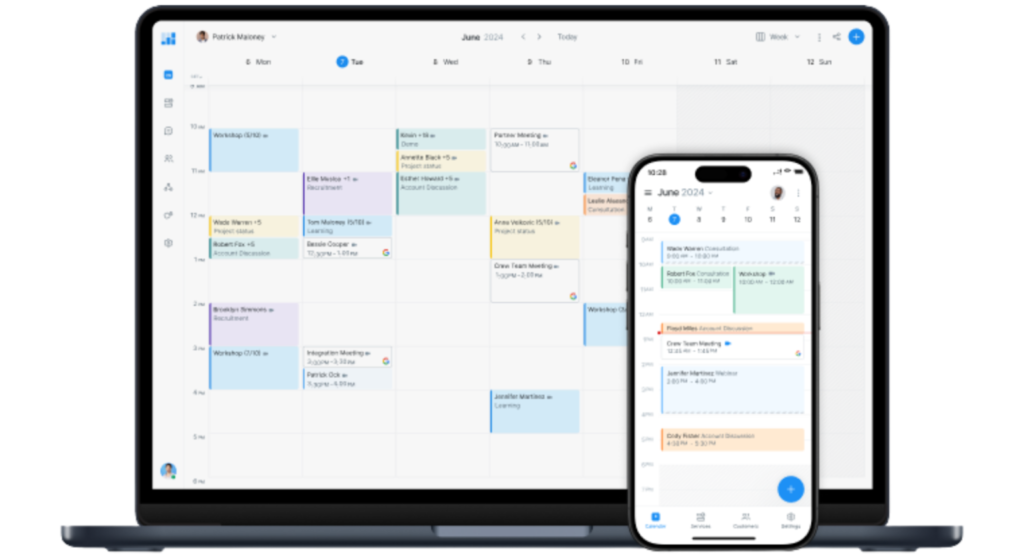
We typically recommend starting with the highest-value interactions (KOL meetings, major symposia, competitive data sessions) and then shaping the schedule around them. Then protect those blocks with 10–15 minute buffers, in case sessions run long, foot traffic slows you down, or discussions take more time than expected.
Without breathing room, even a carefully designed schedule can quickly unravel.
Keep Your Capture in One Place
We’ve seen teams rely on notebooks, shared drives, messaging apps, and slide folders all at once. It works — until it doesn’t.
Fragmented capture makes synthesis harder than it needs to be. After the congress, people spend more time organizing material than interpreting it.
That reality is what ultimately led us to build inVision. But regardless of platform, the principle remains the same:
Choose one structured repository and use it consistently.
Information only becomes knowledge when it’s organized in context.
During the Congress: Don’t Let Structure Slip
Once you’re on-site, competing priorities can multiply quickly. This is where even experienced teams can lose structure.
In order to stay focused, we recommend the following:
Add Context in the Moment
It’s tempting to capture quickly and clean things up later. In practice, “later” rarely comes with full clarity.
Adding just a few seconds of context to a note (why it matters, what question it relates to, who might care internally) makes it far more usable afterward.
A slide photo without context is just an image, whereas a slide tied to a decision or concern becomes meaningful.
Talk Briefly Each Day
Short daily alignment conversations, even if limited to ten minutes, help surface patterns while they are still forming. They allow teams to adjust focus and identify duplication before it compounds.
Themes often emerge gradually across multiple sessions. Recognizing those patterns early improves the quality of remaining coverage.
Pay Attention to Energy
Fatigue introduces small but meaningful inefficiencies: incomplete tagging, unclear shorthand, postponed organization. Spending a few minutes at the end of each day clarifying notes while memory is intact prevents backlog from accumulating.
There’s no prize for attending the most sessions, however there is value in remembering what mattered.
After the Congress: Make It Useful

The conclusion of the meeting marks the beginning of the most consequential work.
Synthesize While It’s Fresh
Within several days, the nuance behind exchanges begins to soften. Capturing thematic shifts, competitive implications, and unresolved questions while recollection remains precise elevates reporting from descriptive to strategic.
Comprehensive decks can follow. Initial clarity should not.
Assign Ownership Explicitly
Meaningful insights require accountable follow-through. Without defined ownership and timing, even well-recognized opportunities can stall quietly.
Report for Decisions
Executives don’t need a recap of everything you saw. They need orientation.
- What shifted?
- Where is there uncertainty?
- What deserves attention now?
The difference between documentation and insight is interpretation.
A Word on Tools
You can manage all of this with spreadsheets and shared folders. Many teams do.
We did too.
Over time, though, we noticed how much effort went into stitching information together after the fact.
Analysts spent hours reconciling notes and files instead of thinking about what they meant.
That frustration is what led us to build inVision — a platform designed specifically for congress coverage in Medical Affairs. Slides can be uploaded directly to sessions. Notes live alongside them. Photos are OCR’d so text becomes searchable later. Sessions can be assigned in advance. Debriefs can be built from what was actually covered.
The goal wasn’t to create another tool; it was to remove friction.
When the mechanics are handled well, teams spend more time in substantive conversations and less time reconstructing what happened afterward.
Contact us if improving your team’s conference coverage is on the agenda for this year, we’re always happy to share what we’ve learned.