
AI is revolutionizing the role of Medical Science Liaisons (MSLs), allowing them to reduce time spent on administrative tasks to more strategic, personalized interactions with healthcare providers (HCPs). As the pharmaceutical industry undergoes a digital transformation, MSLs are using AI tools like predictive
analytics and AI-generated insights to deliver data driven information and improve patient care.
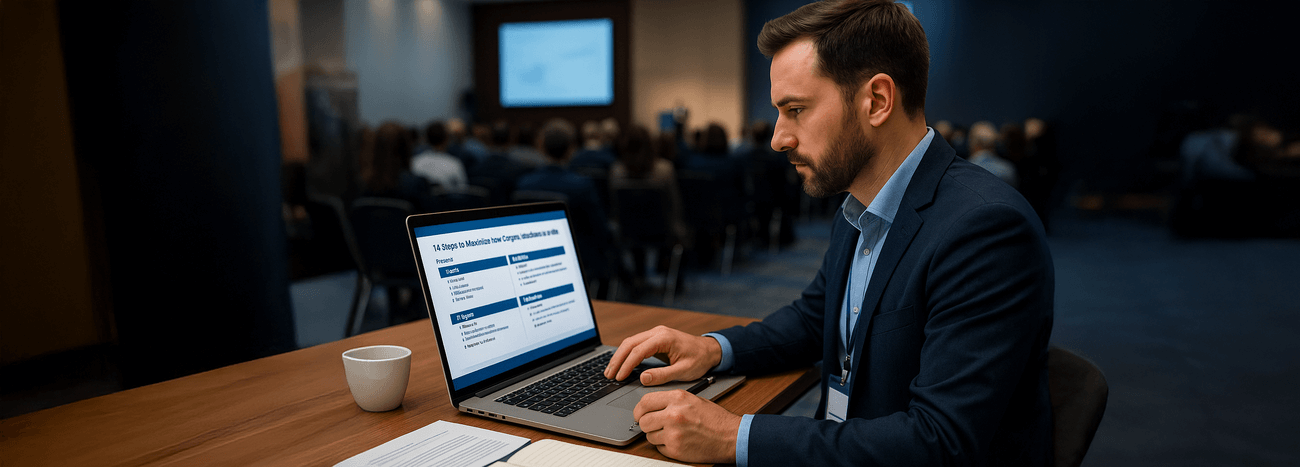
This article outlines best practices for MSLs when using AI to summarize congress abstracts.
Use a Secure and Industry Specific AI Model
- Avoid general models: Never use publicly available tools like ChatGPT for summarizing medical abstracts. These models do not guarantee data privacy, and their training data is unknown, which risks breaching confidentiality.
- Utilize secure, specialized models: Use proprietary AI tools designed for medical or scientific summarization. These systems are built to process large, complex datasets, understand specialized terminology, and often offer greater transparency on their training data.
Prompt Engineering-What is it?
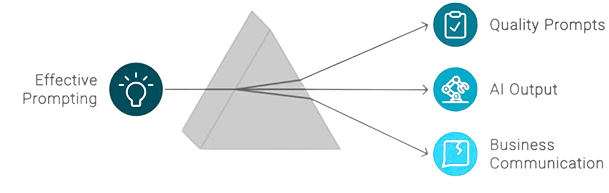
Prompt engineering is how you tell an AI model what to do and how to do it. Users must learn how to formulate precise questions to guide an AI model, which, while trained to understand data, requires proper prompting to deliver accurate answers. This is where prompt engineering comes in! Think of it as the “language” users must learn to communicate effectively with an AI model to elicit the right information.Key Best Practices for AI prompt Engineering
Specificity: Be precise with instructions to avoid vague/irrelevant outputs- Less specific: Tell me about heart disease.
- More specific: “What are the most common risk factors for coronary artery disease?
- Before: Create a slide deck on Type 2 diabetes.
- Optimized: Develop a 10-slide PowerPoint presentation on the latest Type 2 diabetes treatment guidelines, including first-line therapies, patient adherence strategies, and recent clinical trial findings. Target audience: healthcare providers.
- Summarize the key efficacy and safety findings from the attached Phase 2 clinical trial data for [Drug Name] in [Disease Area]. Provide the summary as a threecolumn table
Source: https://medium.com/
Here are some prompts which are useful for MSLs:
| What you want to do | Prompt |
| Structure a basic but comprehensive summary | “Summarize the following congress abstract for a medical affairs team. Focus on the background, methods, key findings, and conclusion, while highlighting the clinical significance.” |
| Analyze the competitive landscape | “Based on the findings in this abstract, provide a summary of the competitive advantages and disadvantages of our therapeutic area.” |
| Combine and compare abstracts | “Compare the results of the following two abstracts on [disease state]. Focus on the differences in study design, population, and overall conclusions.” |
| Generate follow-up questions | “Generate five insightful scientific exchange questions for a Key Opinion Leader (KOL) based on the results and limitations of this abstract.” |
| Translate to actionable insights | “Transform the results of this abstract into actionable insights for an MSL, including potential discussion points for KOLs and the potential impact on future research.” |
Audience Specific Summarization
To tailor the summary for different stakeholders, add specific words to your prompt.| Audience | Key Prompt Words |
| For a medical affairs team | Summarize, abstract, key findings, clinical significance, background, methods, conclusions, implications, impact. |
| For a non-expert audience (e.g., patient advocacy) | Lay summary, plain language, easy to understand, key takeaways for patients |
| For a leadership or executive audience | Executive summary, concise, high level, strategic implications, competitive landscape |
| For a physician or clinician | Clinical practice implications, relevance for treatment decisions, impact on patient care, standard of care |
Source: https://pubmed.ncbi.nlm.nih.gov/
See How We Can Help!
Read how our inVision platform can help with prompt engineering! inThought Labs understands the importance of prompt engineering and has invested significant effort in refining prompts to focus on patient safety, efficacy data, and new or changed information, resulting in more relevant and actionable summaries for MSLs. inVision works with clients to further refine prompts based on their unique focus areas, ensuring that the AI-generated summaries align with the clients’ evolving needs.